
What is HMI (Human Machine Interface)?
What is HMI (Human Machine Interface)?
With the rapid development of technology, human–machine interaction has gained an important place in both industry and daily life. In this context, the question “What is HMI (Human Machine Interface)?” has become increasingly important for improving business efficiency and enhancing user experience. HMI systems act as a bridge between machines and people, making information more understandable and accessible. For example, an HMI screen allows operators to easily access the information they need and control machines efficiently. In addition, these systems play a critical role in increasing safety and minimizing errors in industrial environments. Therefore, the question “What does HMI do?” is no longer just a technical curiosity, but a crucial topic for the future success of businesses.
Basic Principles of HMI Technology
HMI (Human Machine Interface) technology is designed to enable interaction between industrial automation systems and humans. This system allows operators to control machines and processes more effectively. The simplest answer to the question “What is HMI?” is that it creates a communication bridge between humans and machines.
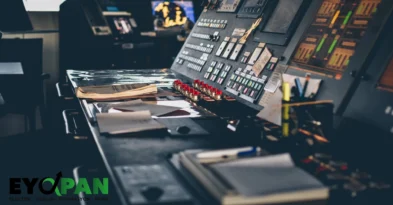
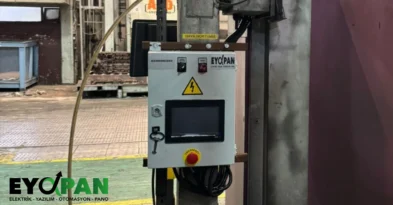
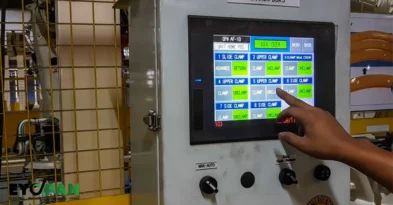
An HMI screen is the interface that allows users to monitor visual data and manage their machines. HMI systems are generally equipped with user-friendly graphics, which speed up operators’ decision-making processes. In addition, thanks to the analytical data provided by these systems, machine efficiency can be increased.
The basic principles of HMI technology are built on prioritizing user experience and ensuring fast access to machine information. Therefore, the effectiveness of HMI systems largely depends on the quality of the interfaces used.
EYOPAN’s Efficient Solutions with HMI Systems
Adopting advanced technology, EYOPAN develops robust HMI systems to simplify and optimize industrial processes. These systems enable users to analyze machine data and make more effective decisions. The solutions developed by EYOPAN are especially designed to increase operational efficiency in production lines.
Thanks to these HMI systems, customers can manage their processes more effectively and respond quickly to rapidly changing industry demands.
The Importance of HMI Systems in Industrial Applications
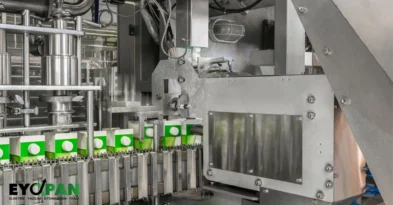
Industrial HMI systems have become an integral part of modern production processes. These systems play a significant role in increasing efficiency and reducing error rates by enabling operators to interact with machines.
The use of HMI panels facilitates control and monitoring functions in various industrial environments. For example, in areas such as power plants or automotive production lines, real-time data can be monitored through user interfaces to answer the question “What does HMI do?”. This provides a great advantage for operators in decision-making and process optimization.
However, the integration and proper use of HMI systems may face certain challenges in every industry; at this point, expert knowledge and experience are required.
User Experience in Modern HMI Design
Today, HMI (Human Machine Interface) design has become a critical field that deeply affects user experience. The interfaces users interact with must be simple, clear, and functional. In HMI design, an experience should be created by considering users’ needs and expectations.
At this point, visual hierarchy and aesthetic elements come to the forefront, because human perception should be guided correctly through colors and layouts. However, sometimes these interfaces can become complex for users. Therefore, it is important that every design is both simple and functional.
HMI design is not just a technical process; it also requires algorithmic thinking and a creative approach. For this reason, offering an effective experience from a user-oriented perspective is essential.
Components and Functions of HMI Systems
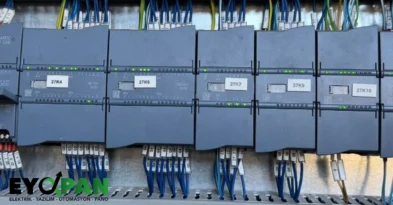
HMI systems consist of various components designed to enable interaction between humans and machines. These components include displays, control panels, sensors, and software.
- Displays allow users to obtain information about system status and perform controls.
- Control panels optimize user interaction.
- Sensors are used to collect physical data.
- Software processes this data and ensures the system operates efficiently.
HMI systems generally perform the following functions:
- Data Visualization: Makes it easier for users to understand system data.
- Control and Management: Directs and manages the operation of machines.
- Alarm and Notification: Informs users about potential issues.
The interaction of these components increases the effectiveness of HMI systems, providing a more reliable and user-friendly experience. Each industry can develop HMI solutions suitable for its own needs, thereby increasing productivity.
Information About HMI Systems with EYOPAN
HMI systems are developed to meet the needs of companies in various industries. In this context, our company EYOPAN aims to increase business efficiency by offering HMI solutions. Our systems, which prioritize user experience, contribute to industrial automation and control processes while simplifying users’ workflows.
As EYOPAN, we attach great importance to increasing the competitiveness of companies in line with the opportunities offered by these technologies.
HMI and IoT: Interaction of Smart Systems
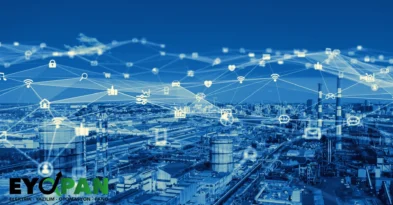
HMI (Human Machine Interface) is an interface that enables interaction between humans and machines. When combined with IoT (Internet of Things), these systems create a more dynamic and intelligent structure. While HMI allows operators to manage machines more efficiently, IoT optimizes data flow between systems.
Thus, users can access real-time data and make instant decisions. However, these interactions can sometimes become complex; for example, issues such as data security and privacy can affect system efficiency. Therefore, the integration of HMI and IoT requires continuous development in areas such as communication, data analytics, and user experience.
As a result, the combination of these two technologies holds great potential for the future of smart systems.
Industry 4.0 and HMI: Factories of the Future
With the digitalization and increased automation of production processes, Industry 4.0 is fundamentally changing factory dynamics. In this transformation, HMI (Human Machine Interface) makes interaction between operators and machines easier and more effective.
HMI systems allow operators to monitor data in real time, interact with machines, and make critical decisions. However, it should also be emphasized that HMI applications go beyond being just a technical tool and offer an approach that increases user experience and productivity, thus making production processes more flexible.
Factories of the future can become smarter, more efficient, and more resilient thanks to HMI solutions, although how these systems will evolve still remains uncertain.
HMI Software: Popular Options and Their Features
HMI (Human Machine Interface) software is an indispensable part of industrial automation systems. By enabling users to interact with machines and systems, it increases efficiency. There are many popular HMI software solutions on the market.
These software solutions stand out with their user-friendly interfaces, customizable panels, and powerful graphical displays. For example, software offering features such as event notifications, data analysis, and remote monitoring is frequently preferred.
The answer to the question “What is HMI?” is directly related to the functions offered by this software. In addition, integration options, compatibility with different protocols, and ease of learning are important factors to consider when making a selection.
EYOPAN HMI Software Solutions
To optimize your business processes and gain efficiency through technology, it is important to review different HMI software solutions. In this context, our company EYOPAN offers high-quality HMI software solutions.
With advanced interface designs and efficient data management features, our solutions can be tailored to the needs of businesses. All these capabilities allow users to perform big data analysis and make operations more streamlined.
At this point, the question “What is HMI?” is important in terms of understanding the user experience. By choosing to work with EYOPAN, you can take your company’s operations to the next level.
HMI Screens and Custom Solutions with EYOPAN
HMI (Human Machine Interface) screens are a critical component that enables users to interact with machines. As EYOPAN, we aim to maximize user experience by offering touch, physical, and custom solutions.
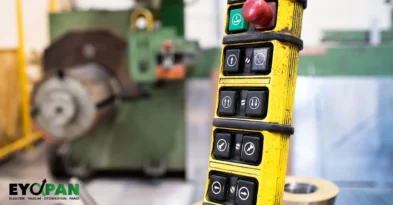
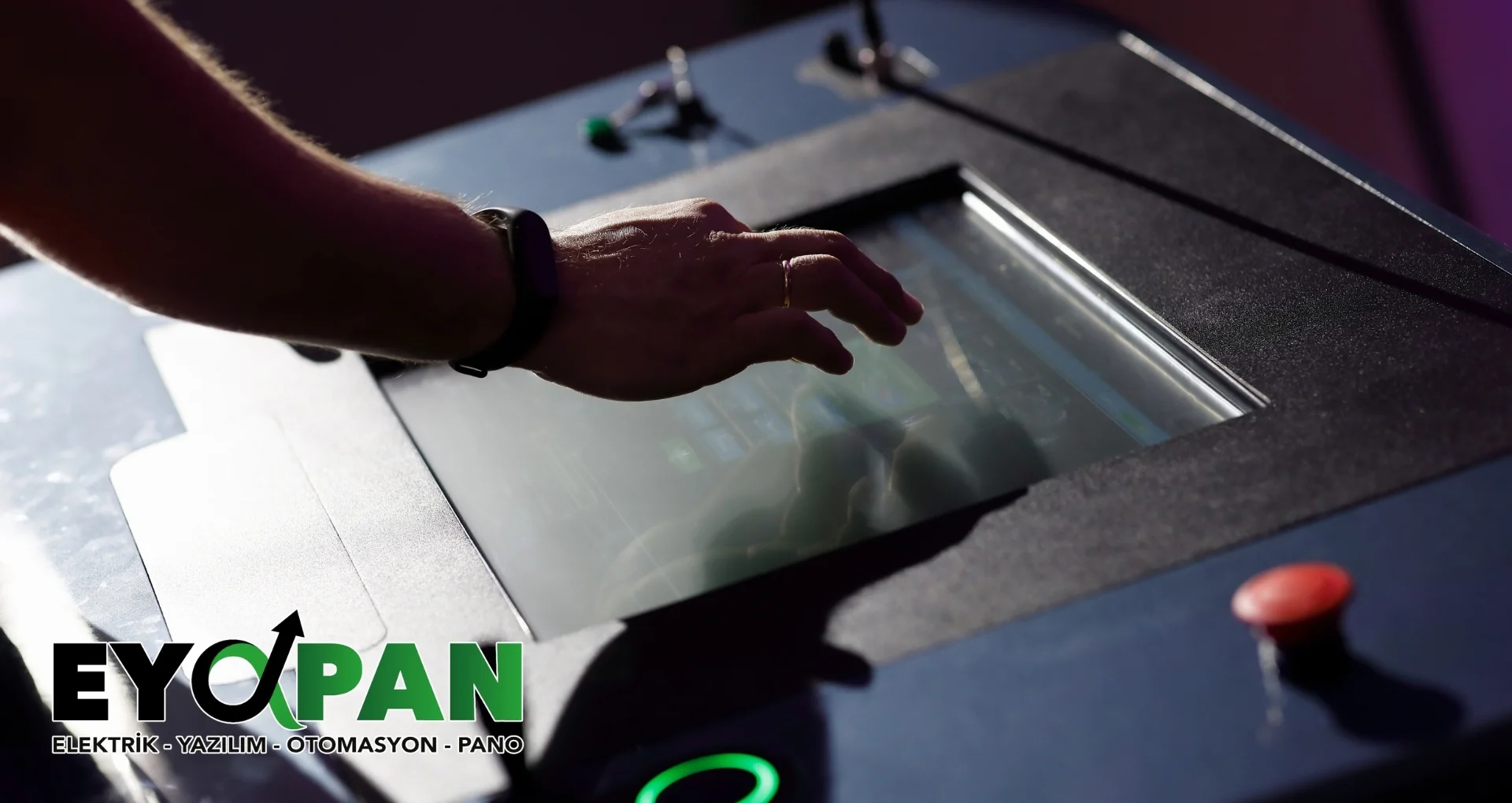
Touch screens are widely used in modern industrial units and facilitate operations with their user-friendly interfaces. In addition, physical buttons and switches offer a more robust and reliable alternative for certain applications. Our custom solutions are designed to meet the unique requirements of each business.
In this context, EYOPAN’s personalized solutions help users make their business processes more efficient. Therefore, we see it as our mission to offer the best options in HMI technologies.
HMI Security: Risks and Protection Methods
HMI (Human Machine Interface) systems are at the heart of industrial environments. However, the security of these systems brings certain risks. First of all, cyberattacks are a major threat to HMI security. At this point, cyber defense can be ensured through strong encryption methods and regular updates.
In addition, user errors are also among the risk factors; however, these risks can be minimized through comprehensive training programs. On the other hand, physical security measures should not be ignored. Controlling access to HMI systems increases their security.
Therefore, integrating all these methods can improve the security level of HMI systems and provide a more reliable operational environment.
The Future of HMI: Emerging Technologies and Trends
In recent years, rapid developments in HMI (Human Machine Interface) technologies have led to remarkable transformations in industrial automation and user experience. In particular, the integration of artificial intelligence and the Internet of Things (IoT) enables HMI systems to become smarter and more interactive.
The way users interact with machines is being enriched with innovations such as visual elements, haptic feedback, and voice commands. In the future, the following trends are expected to stand out:
- Artificial Intelligence Integration: HMI systems becoming more personalized and analytical.
- Mobility and Remote Access: Devices becoming controllable from anywhere.
- Data Visualization: Graphical interfaces that enable better analysis and decision-making processes.
EYOPAN: Innovative Solutions in the Field of HMI
With advancing technology, as EYOPAN, we continuously renew our HMI systems in line with modern needs. Our user-centered solutions help industrial processes to be managed more efficiently. With our experience in the field of HMI, we follow the most up-to-date practices in the industry while prioritizing customer satisfaction.
In this context, innovative studies on the future of HMI systems offer a great opportunity to better understand users and improve their interactions.
Frequently Asked Questions
What is HMI?
HMI stands for Human Machine Interface and is a system used to enable interaction between humans and machines.
What are the benefits of HMI?
HMI provides ease of use, efficient information flow, better control, and monitoring capabilities.
What are the types of HMI?
Types of HMI include industrial panels, software-based interfaces, and mobile HMI solutions.
How does HMI work?
HMI receives commands from the user, processes them, and provides feedback to control machines or monitor their status.
What is the best way to use HMI?
An effective HMI design provides a user-friendly interface that allows users to control machines easily and efficiently.
What is the difference between HMI and SCADA systems?
HMI focuses on the user interface, while SCADA systems have a broader monitoring and control scope.
Is there a relationship between HMI and IoT?
Yes, HMI systems can be integrated with IoT devices to provide remote monitoring and control.
What should be considered in HMI design?
User experience, visual design, accessibility, and user feedback are important factors in HMI design.
In which sectors are industrial HMI systems used?
Industrial HMI systems are used in many sectors such as automotive, energy, food production, pharmaceuticals, and water treatment.
What is expected for the future of HMI?
The future of HMI is expected to further develop through integration with artificial intelligence and machine learning.